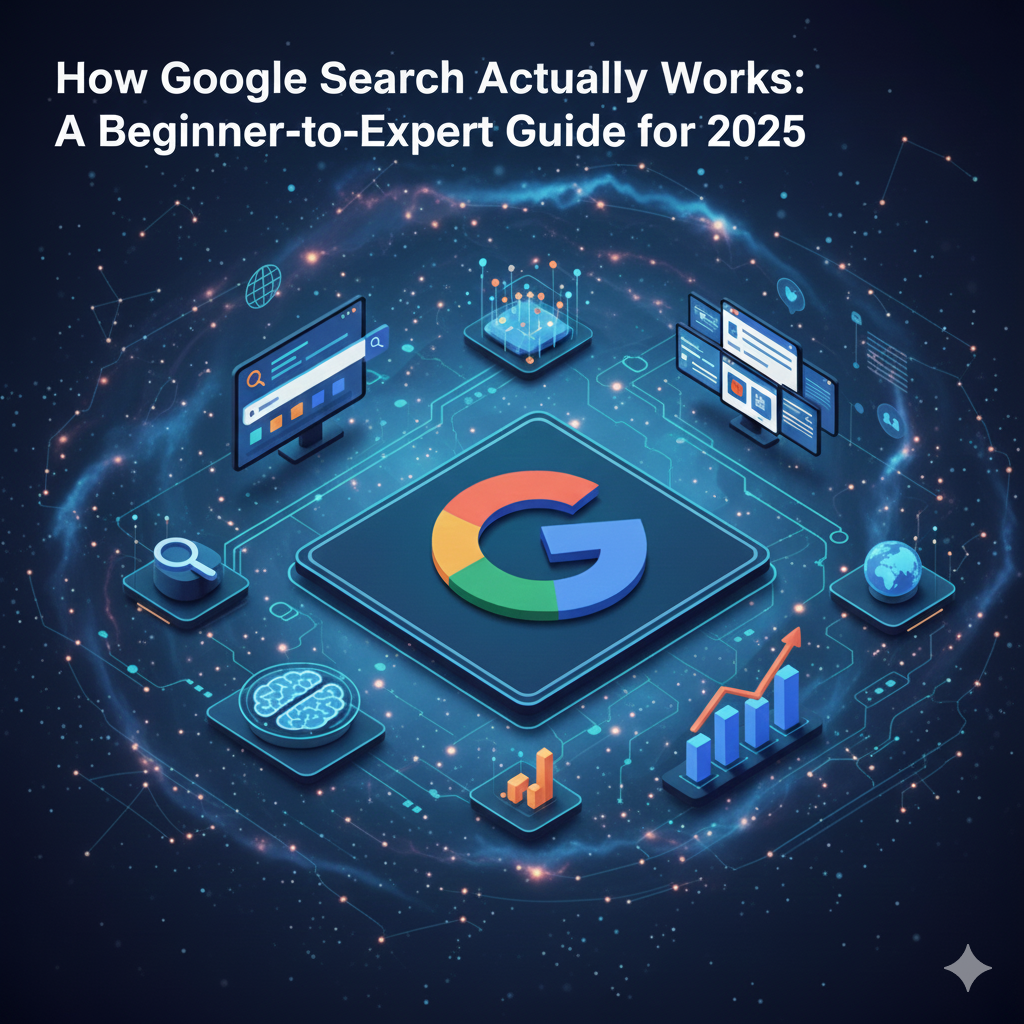
Introduction: Why Every Business Must Understand How Google Search Works
Every time someone types a query into Google, a complex system of crawling, indexing, ranking, and evaluation takes place in milliseconds. Yet most businesses invest in technical SEO services without understanding how Google decides which pages deserve to appear on top. In 2025, understanding this system is not just beneficial — it is essential. With constant algorithm updates, new AI-driven features, and evolving search intent, only businesses that truly understand Google’s internal logic can build predictable, growth, many brands rely on a proper SEO audit stable, and sustainable online visibility
Google’s core job is simple: deliver the most helpful, trustworthy, relevant result for each search But the process behind this simple statement is extremely sophisticated. This blog breaks down the entire journey — from crawling to indexing to ranking — and explains how Google actually evaluates your website, your content, your user experience, and your authority. Whether you're a beginner or scaling your business, understanding this system will give you a strategic advantage that most brands never gain.
1. Why Understanding Google Search Is Essential for Businesses
Most businesses think SEO is just keywords and content. But real SEO success comes when you understand how Google works internally. A strong content strategy service ensures your content aligns with search behavior and intent.
- how Google finds your website
- how it stores your pages
- how it decides rankings
- how search intent influences visibility
- how semantic search understands meaning
- how E-E-A-T defines trust
- how penalties work
- how AI Overviews (SGE) change results
If you know how search works, you can create content and structure your site in a way that aligns naturally with Google’s systems. This leads to more stable rankings, better traffic, and predictable growth. Businesses that ignore this foundation rely on guesswork — and guesswork never survives algorithm changes.
2. What Is Crawling, Indexing & Ranking?
Before diving into advanced concepts, let's define the three pillars of search
Crawling
Googlebot discovers pages. Proper implementation via technical SEO services ensures all pages are accessible.
Indexing
Google saves and organizes the discovered pages in its database. A detailed SEO audit helps identify indexing issues.
Ranking
Google decides which pages should appear where for a given query. This is based on relevance, quality, trust, usability, and dozens of signals.
- If your website cannot be crawled → it cannot be indexed.
- If it cannot be indexed → it cannot be ranked.
- If it cannot be ranked → it does not exist on Google.
This is why understanding these three steps is the heart of SEO.
3. What Is User Intent? (The Core of Google’s Search Logic)
Understanding intent is critical. A well-planned content strategy service ensures your content matches what users are actually searching for.
Google categorizes intent into four major types:
- Informational: “How to fix AC water leakage”
- Navigational: “Instagram login”
- Commercial: “best laptops under 50,000”
- Transactional: “buy running shoes online”
Google ranks content differently depending on intent. If your content does not match intent, it will not rank—no matter how good it is.
User intent alignment = ranking power.
4. What Is Semantic Search? (Meaning, Not Just Keywords)
Google understands meaning, not just keywords. This is why modern content strategy services focus on topics, not just keywords.
- Synonyms
- Concept relationships
- Context
- User meaning
- Natural language patterns
Example: “heart pain left side meaning” → Google understands medical intent, not just keywords.
Google focuses on meaning, not just matching words.
5. How Google Search Works (Step-by-Step)
Step 1: Page Discovery
- Internal linking and backlinks help discovery — both managed through technical SEO services.
- Backlinks
- Sitemaps
- URL submission
- Social signals
- Updated content
Googlebot scans the web to discover new pages.
Step 2: Sitemap Role
A sitemap is essential and usually optimized via technical SEO services.
A sitemap tells Google:
- Which pages exist
- Which are important
- Update frequency
- Site structure
Step 3: Crawling
Crawl issues can block rankings. A professional SEO audit helps fix these problems.
Googlebot checks:
- Page access
- Loading speed
- Mobile usability
- JavaScript rendering
- Errors (404, 500)
Step 4: Indexing
Pages may not be indexed if:
Indexing failures often come from technical issues — again solved with technical SEO services.
- Low-quality content
- Duplicate content
- Slow loading
- Thin content
- Technical issues
Only indexed pages can rank.
Step 5: Content Quality Analysis
High-quality content is built through a strong content strategy service.
Google evaluates:
- Relevance
- Depth
- Accuracy
- Structure
- Engagement
Top-performing content is:
- Helpful
- Original
- Trustworthy
Step 6: E-E-A-T (Trust Signals)
- Experience
- Expertise
- Authoritativeness
- Trustworthiness
Strong E-E-A-T increases ranking potential significantly.
Step 7: Ranking Factors
- Relevance
- Backlinks
- Content depth
- Page speed
- Mobile UX
- Core Web Vitals
- User engagement
Step 8: Ranking Changes
Rankings fluctuate — regular monitoring through an SEO audit helps maintain stability.
- Algorithm updates
- Competitor changes
- Backlink shifts
- User behavior
Step 9: Google Penalties
Avoid penalties by following best practices recommended in technical SEO services.
- Keyword stuffing
- Spam backlinks
- Duplicate content
- Hidden text
- AI low-value content
Step 10: Long-Term SEO Stability
- Helpful content
- Technical health
- Natural backlinks
- Content updates
- User engagement
Step 11: AI Overviews (SGE)
AI Overviews impact SEO by:
- Reducing clicks
- Highlighting authority
- Using structured data
- Preferring concise answers
High-quality SEO is still essential—even with AI.
6. Impact: What Businesses Gain
- Predictable SEO results
- Better content strategy
- Smarter optimization decisions
Businesses using local SEO services can further strengthen visibility for location-based searches.
Understanding Google = control over rankings.
7. Beginner Checklist
Start with a proper SEO audit to identify gaps.
Track & Improve:
- Indexing status
- Sitemap health
- Mobile usability
- Page speed
- CTR & bounce rate
Tools:
- Google Search Console
- Google Analytics
- PageSpeed Insights
- Screaming Frog
- Ahrefs Tools
Consistency beats shortcuts.
Conclusion: Google Rewards Value, Not Tricks
Google’s goal is simple: provide the best answer.
Businesses that invest in technical SEO services, build strong content strategies, and regularly perform an SEO audit achieve long-term success.focus on value, intent, and trust win long-term.
The better you understand Google, the stronger your SEO becomes.