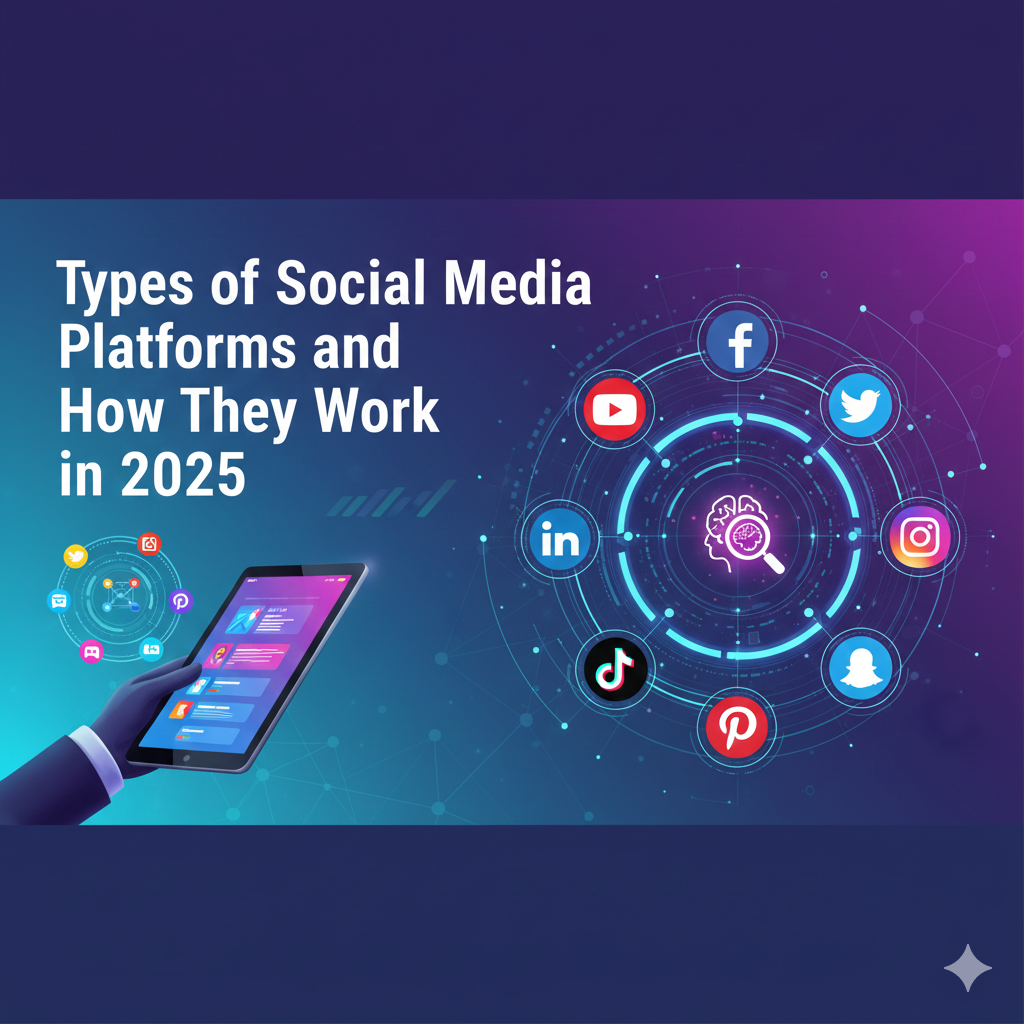
Types of Social Media Platforms and How They Work in 2025
Introduction: Why Understanding Social Media Types Matters Today
In 2025, social media has become a complete ecosystem. Businesses now rely on social media marketing services grown far beyond simple communication. It has become a digital ecosystem where people socialize, learn, shop, research, debate, form communities, and build careers. For businesses, creators, marketers, and professionals, understanding the different types of social media platforms is crucial because each category serves a completely different purpose. What works on Instagram will not work on Reddit, and a strategy built for LinkedIn cannot be applied to Snapchat or Pinterest.
Audiences behave differently across platforms depending on their mindset, motivation, and the format they want to consume. When businesses understand these platform categories, they stop posting randomly and start building intentional strategies that match user expectations. This clarity not only improves communication but also amplifies engagement, strengthens trust, and multiplies brand visibility.
When brands understand platform categories, they stop posting randomly and start building structured strategies with digital strategy consulting.
The goal of this blog is to explain the 12 major types of social media platforms, how they work, why they matter, and how brands can use them intelligently in 2025.
A. What Are Social Media Platform Types?
Social media platforms are grouped into types based on how users interact, To succeed, businesses must combine platform understanding with strong content creation services. the kind of content shared, and the purpose the platform fulfills. Some platforms focus on networking, others on short updates, long-form blogs, images, videos, reviews, shopping, community discussions, or virtual experiences.
- choose the right platforms for their goals
- create content tailored to each platform
- understand user psychology
- plan posting frequency
- optimize engagement
- avoid wasting resources
Instead of treating “social media” as one channel, the goal is to understand it as an ecosystem of specialized platforms.
B. HOW: The 12 Types of Social Media Platforms Explained
1. Social Networking Sites (Connection + Communication)
Social networking Platforms like Facebook and LinkedIn help build relationships and communities. These are best managed through social media marketing services.were the foundation of modern social media. Their primary purpose is to help users build relationships, communicate, join groups, and share updates with friends or professional contacts.
Examples: Facebook, LinkedIn (professional networking), Orkut (historic), MySpace (historic)
These platforms allow users to create profiles, connect with people they know, share photos, post updates, join groups, and interact with communities. Facebook focuses more on personal and community engagement, while LinkedIn focuses strictly on professional networking and industry relationships.
2. Microblogging Platforms (Short Updates + High-Speed Communication)
Fast-paced content platforms like Twitter (X) require consistent and strategic content backed by content creation services.Microblogging platforms allow users to share short, fast-paced content built around trends, opinions, and real-time discussions.
Examples: Twitter (X), Tumblr
3. Media Sharing Platforms (Images + Video Content)
These platforms focus on visual storytelling and creative expression through images, reels, stories, vlogs, and tutorials.
Platforms like Instagram and YouTube focus on visual storytelling. Businesses use Instagram marketing to increase engagement and reach.
Examples: Instagram, YouTube, Snapchat, Flickr
4. Messaging & Community Apps (Direct Communication + Groups)
Messaging apps function as private or semi-private communication tools for fast, direct interaction.
Examples: WhatsApp, Telegram, Messenger, Signal, WeChat, Koo (India)
5. Discussion Forums & Knowledge Communities
Built on discussion, problem-solving, and experience-based knowledge sharing.
Examples: Reddit, Quora, Stack Overflow
6. Blogging & Publishing Platforms
Long-form platforms like Medium and WordPress require high-quality content creation services.
Examples: Medium, WordPress, Substack, Blogger
7. Professional & Business Networking Platforms
LinkedIn and similar platforms benefit from structured digital strategy consulting.
Examples: LinkedIn, Xing, AngelList
8. Review & Recommendation Platforms
Help users rate, review, and recommend products and services.
Examples: TripAdvisor, Yelp, Glassdoor, Zomato
9. Live Stream & Real-Time Interaction Platforms
Enable real-time engagement through live video and interactive sessions.
Examples: Twitch, YouTube Live, Facebook Live, Bigo Live
10. Interest-Based Communities & Niche Networks
Built around shared passions, hobbies, and fandoms.
Examples: Discord, Goodreads, Last.fm
11. Social Commerce Platforms
Platforms like Pinterest and Instagram Shopping combine content with direct selling, supported by Instagram marketing.
Examples: Pinterest, Instagram Shopping, TikTok Shop, Meesho (India)
12. Virtual World & Metaverse Social Platforms
These platforms represent immersive digital experiences where users interact through avatars, virtual environments, and shared spaces.
Examples: Roblox, Second Life, VRChat, Horizon Worlds
Users explore virtual worlds, attend digital events, purchase virtual assets, and socialize in 3D environments. Businesses explore these platforms for future branding, virtual launches, and immersive customer engagement.
C. IMPACT: Why Knowing Platform Types Improves Marketing
Understanding platform types helps businesses improve ROI and engagement through social media marketing services.social media types helps businesses and creators avoid wasting time on the wrong platforms and instead focus on where their audience actually is. This clarity improves content performance, engagement rates, and brand outcomes.
- stronger audience targeting
- more effective content creation
- higher engagement
- consistent brand experience
- better ROI on marketing efforts
- deeper audience understanding
Brands grow faster when they use platforms intentionally, not randomly.
D. GUIDANCE: How Beginners Should Use These Platform Types
- Start with 2–3 platforms only
- Choose platforms that match your industry
- Combine strategy + execution using digital strategy consulting
- Create platform-specific content, not duplicate posts
- Track analytics weekly
- Use consistent branding and storytelling
- Expand to more platforms slowly
Best platform choices by business type:
- Local business: Facebook, Instagram, WhatsApp
- Professional service: LinkedIn, Medium
- Creators: YouTube, Instagram, TikTok
- Tech/IT: Reddit, Twitter, Stack Overflow
- Ecommerce: Pinterest, Instagram Shopping, TikTok Shop
Platform selection = strategy.
Conclusion: Social Media Is an Ecosystem, Not One Platform
In 2025, social media is diverse, dynamic, and deeply integrated into daily life. Each platform type serves a different purpose — networking, entertainment, learning, shopping, reviewing, discussing, or community-building.
Businesses that combine platform knowledge, content creation services, and social media marketing services will succeed in 2025.understand these 12 categories can create smarter social strategies, reach the right audiences, and communicate more effectively. The future belongs to brands that master multiple channels and deliver the right content on the right platform at the right time.